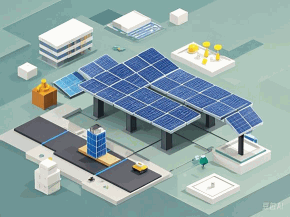
1. Promotion methods for home solar photovoltaic power plants include solar powered elderly care.
In rural China, due to the fact that rural residents do not pay social insurance in their normal lives, pension has become a common problem when they are too old to engage in related work. At this point, residents can choose to purchase pension insurance. However, the current economic conditions and the dual pressure of an aging population have led to great skepticism towards pension insurance. Then photovoltaic elderly care is a very good solution, after all, the investment return of photovoltaic is relatively high, the income is relatively stable, and the income cycle is about 25 years. The country has also been supporting the photovoltaic power generation industry. Investing in photovoltaic power plants in areas where social security is not yet widespread is a long-term and effective source of income, which can be implemented as a poverty alleviation and elderly care plan; In areas with improved social security, investment can also be considered as a stable source of income.
In rural China, due to the fact that rural residents do not pay social insurance in their normal lives, pension has become a common problem when they are too old to engage in related work. At this point, residents can choose to purchase pension insurance. However, the current economic conditions and the dual pressure of an aging population have led to great skepticism towards pension insurance. Then photovoltaic elderly care is a very good solution, after all, the investment return of photovoltaic is relatively high, the income is relatively stable, and the income cycle is about 25 years. The country has also been supporting the photovoltaic power generation industry. Investing in photovoltaic power plants in areas where social security is not yet widespread is a long-term and effective source of income, which can be implemented as a poverty alleviation and elderly care plan; In areas with improved social security, investment can also be considered as a stable source of income.
What is photovoltaic power generation and why does the country vigorously promote it
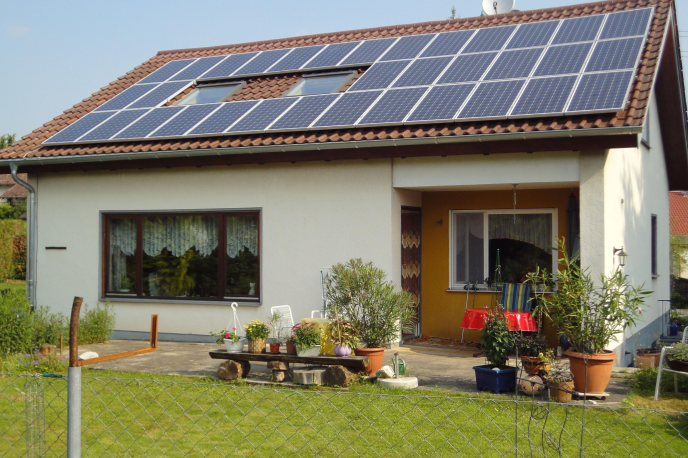
Distributed solar power generation mainly refers to the installation and use of distributed solar power generation systems on households' own roofs. Residential photovoltaics have small installation capacity, multiple installation points, simple grid connection process, and obvious direct benefits. It is also the most subsidized form of distributed photovoltaic power generation application by the state.
Why does the country support:
Because photovoltaic power generation has the advantages of economic energy saving, thermal insulation and cooling, green environmental protection, and aesthetic personality:
(1) Economic energy conservation: Generally self generated, excess electricity can be sold to power supply companies through the State Grid, and when insufficient
Powered by the power grid, saving electricity costs and receiving subsidies from now on;
(2) Thermal insulation and cooling: It can insulate and cool down 3-6 degrees in summer, and reduce heat transfer in winter
(3) Green and environmentally friendly: Distributed photovoltaic power generation projects generate electricity without noise or light pollution during the power generation process
There is no radiation, it is a truly zero emission, zero pollution static power generation;
Distributed solar power generation mainly refers to the installation and use of distributed solar power generation systems on households' own roofs. Residential photovoltaics have small installation capacity, multiple installation points, simple grid connection process, and obvious direct benefits. It is also the most subsidized form of distributed photovoltaic power generation application by the state.
Why does the country support:
Because photovoltaic power generation has the advantages of economic energy saving, thermal insulation and cooling, green environmental protection, and aesthetic personality:
(1) Economic energy conservation: Generally self generated, excess electricity can be sold to power supply companies through the State Grid, and when insufficient
Powered by the power grid, saving electricity costs and receiving subsidies from now on;
(2) Thermal insulation and cooling: It can insulate and cool down 3-6 degrees in summer, and reduce heat transfer in winter
(3) Green and environmentally friendly: Distributed photovoltaic power generation projects generate electricity without noise or light pollution during the power generation process
There is no radiation, it is a truly zero emission, zero pollution static power generation;
(4) Aesthetic personality: perfectly combining architecture or aesthetics with photovoltaic technology, making the entire roof look beautiful and atmospheric, with a strong sense of technology, and enhancing the value of the property itself
3.What is the photovoltaic power generation vigorously promoted by State Grid Corporation of China
Photovoltaic power generation is a technology that utilizes the photovoltaic effect of semiconductor interfaces to directly convert light energy into electrical energy.
It mainly consists of three parts: solar panels (components), controllers, and inverters, with electronic components being the main components. After being connected in series and encapsulated for protection, solar cells can form large-area solar cell modules, which, when combined with power controllers and other components, form photovoltaic power generation devices.
In the next decade, the market for photovoltaic power generation in China will shift from independent power generation systems to grid connected power generation systems, including desert power stations and urban rooftop power generation systems. The development potential of solar photovoltaic power generation in China is enormous. With active and stable policy support, the installed capacity of photovoltaics will reach 100 million kilowatts by 2030, and the annual power generation will reach 130 billion kilowatt hours, which is equivalent to building less than 30 large coal-fired power plants. The country will invest 20 billion yuan to subsidize the photovoltaic industry in the next three years, and China's solar photovoltaic power generation has ushered in a new round of rapid growth, attracting more strategic investors to integrate into this industry.
3.What is the photovoltaic power generation vigorously promoted by State Grid Corporation of China
Photovoltaic power generation is a technology that utilizes the photovoltaic effect of semiconductor interfaces to directly convert light energy into electrical energy.
It mainly consists of three parts: solar panels (components), controllers, and inverters, with electronic components being the main components. After being connected in series and encapsulated for protection, solar cells can form large-area solar cell modules, which, when combined with power controllers and other components, form photovoltaic power generation devices.
In the next decade, the market for photovoltaic power generation in China will shift from independent power generation systems to grid connected power generation systems, including desert power stations and urban rooftop power generation systems. The development potential of solar photovoltaic power generation in China is enormous. With active and stable policy support, the installed capacity of photovoltaics will reach 100 million kilowatts by 2030, and the annual power generation will reach 130 billion kilowatt hours, which is equivalent to building less than 30 large coal-fired power plants. The country will invest 20 billion yuan to subsidize the photovoltaic industry in the next three years, and China's solar photovoltaic power generation has ushered in a new round of rapid growth, attracting more strategic investors to integrate into this industry.